A rise in remote working, and the growing popularity of hybrid work models, has thrown up more than a few challenges when it comes to communication, collaboration, productivity and the preservation of workplace culture. It’s fair to say that with so much going on in the world of work right now, it’s very difficult to know where to focus your efforts to get the most out of the strategy you’re pursuing.
But, out of everything, employee experience is probably the best place to start. Why, you ask? Well, we’ve got one good reason why and we’re going to explore it in more depth in this blog!
Why Should Employee Experience Be A Priority Right Now?
The employee experience is the journey every employee embarks on from their very first interaction with your business to the very last. Throughout this journey, there are a wide variety of touchpoints that have the power to shape how an employee feels about their work and your organisation.
Without a doubt, employees will have an experience, either positive or negative, no matter what. But, right now, organisations are more focused than ever on shaping positive employee experiences by ensuring those touchpoints are carefully crafted to leave a good taste in the mouth of your people.
But why?
Well, we could list a whole range of reasons why you should prioritise the employee experience, but you’re only going to need one…
Your employees are programmed to remember the bad experiences they have at work better than the good ones.
And not just your employees. All of us. It’s literally in our nature.
The Negativity Bias
Every human on this planet has an evolutionary trait baked into their being known as negativity bias. This means that we remember negative experiences far longer than positive ones, without us even realising. The theory behind this is, if we remember negative experiences more vividly, we’re less likely to let them happen again and ultimately we will live longer.
Negativity bias is self preservation in action. And just because we as humans have reached the top of the food chain and developed ways of living well beyond the wildest dreams of our caveman ancestors, it doesn’t mean negativity bias has disappeared. It just manifests itself in different parts of our life now and influences our behaviours in more subtle ways.
When you apply this survival instinct to the employee experience, it means that the negative experiences your employees have at your company stick with them for much longer than the positive ones, and could ultimately be the reason why they leave or disengage. It also means that it takes a lot more good experiences to outweigh one bad one. So, when an employee has a bad experience in your organisation, you have to work five times harder to counteract the effects.
So what can we do to avoid that? Surely I’m not suggesting that HR teams or leaders should try to influence every single experience an employee has?
Well, no. But yes.
Let me explain…
Shaping The Employee Experience
When push comes to shove, it’s impossible to make sure that every experience an employee has at work is positive. There are too many variables out of your control, not to mention the unpredictable nature of humans themselves.
But that doesn’t mean we can’t take steps to shape the employee experience for the better.
When you realise the power the employee experience has on pretty much all areas of your business, you’ll understand just how important it is to hone in on those touchpoints that you can control and put measures in place to make the employee experience as positive and frictionless as possible.
Know What Makes A Negative Experience
You could probably have a good guess at what makes a negative experience for your employees and work from that. However, a far quicker and more comprehensive way of doing it is to look at the data and information you have already.
Employee surveys, exit interviews, grievances, and feedback provide a rich source of information that comes straight from the mouth’s of your people.
Listening to what your employees think and feel about their job, your workplace culture, the goals of the business and the people within it will give you a great starting point to map out the employee experience and identify those key touchpoints that prove to be moments of truth for your people.
Keep Things Personal
Personalised experiences make everyone feel special. Why would work be any different? Your employees don’t want to be treated like they are just another cog in the machine. They want to understand their contribution and feel supported to be their best selves at work.
While employee personas are a fantastic way to better understand your people, they don’t always take into account unique situations and responses that we can’t plan for or predict. That is where personalisation comes in and it starts with treating everyone like humans and extends to your workplace mission, values, culture, guiding principles, policies and leadership styles.
Employee Experience = Customer Experience
We all understand the importance of the customer experience. By making sure customers feel good about their interactions with your business, you can enjoy a whole host of benefits such as increased customer loyalty, retention, faster growth, brand advocacy and much more.
The employee experience is no different. And frankly, it’s crazy how long it’s taken for the world of work to understand and absorb this key message.
When your employee experience is positive and your employees are feeling good about their work and place in the business, they are better equipped to provide or contribute to a good customer experience. Simple!
Control The Controllable
When you control the things within your control, your business will be better able to provide an enjoyable and positive employee experience.
For example, there are key employee experience touchpoints built into pretty much every employee journey:
● Recruitment
● Onboarding/Induction
● Growth
● Exit
In all of these touchpoints, there are experiences that you can control and processes you can put in place to make the journey more positive for your employees. From here, it’s much easier to build out a whole journey and discover new opportunities to reinforce a positive employee experience by listening to employees and managers when they respond to certain situations.
Be Proactive
The world of work has changed drastically recently and it will continue to do so over the coming years, fuelled in no small part by evolutions in technology.
In being proactive, rather than reactive, you can anticipate these changes and take steps to change up your employee experience well before a problem arises.
A key example of this is the recent transition to remote and hybrid working due to the pandemic. Organisations who already had flexible working practices in place were better equipped to adapt to the dramatic change than those businesses who were clinging on to the traditional office-based 9-5.
By asking questions, listening, monitoring engagement trends and adopting a people-first approach, you can anticipate changes on the horizon and pivot quickly instead of playing catch up after the event.
Experience Is Everything
As much as we might try and distract ourselves with more complex, technical approaches, a successful business really does come down to providing an excellent employee experience. Especially now.
Your employees are everything to your business. They are the people who make things happen and the brains behind innovation and growth. When you treat them in a way that leaves them feeling good, they are able to continue doing this with very little distraction. On the other hand, when the employee experience leaves a bad taste in their mouth (for example they don’t feel appreciated or heard) they are only able to focus on these bad experiences because they want to actively avoid them in future.
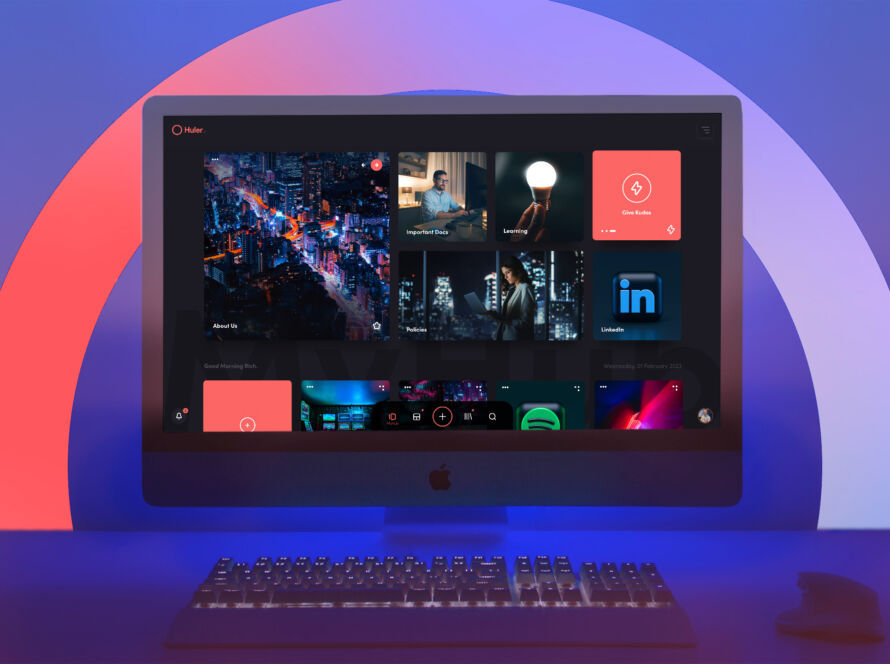
Here at Huler, we firmly believe that the employee experience should be a number one priority for all organisations regardless of sector, industry or size. If you’d like help in shaping yours to be as positive as possible, we’ve developed HulerHub, a people-first employee experience platform. To learn more about HulerHub’s features and how they can be used in your organisation, book a demo today.